First time in Osaka: a route that leaves room to look up
The first visit does not need a heroic checklist. Choose one strong morning, one generous meal and one evening neighbourhood, then let the spaces between them become part of the trip.
Osaka can feel instantly familiar and slightly overwhelming at the same time. Stations are busy, signs multiply, and every street seems to offer a different reason to turn left. The easiest way to settle in is to work with the city’s shape rather than fight it: begin in the centre, move in one direction, and keep a spare hour for whatever catches your eye.
Start with a base that forgives a tired arrival
Namba is a practical first base for many short visits. It puts food, late trains and several walkable districts close together, so a delayed flight or an unexpectedly long lunch does not break the day. Umeda is another sensible choice if you value big stations, department stores and easy onward connections. Neither is a wrong answer; the better choice is the one that keeps your evening simple.
On arrival, resist the urge to solve every journey at once. Put your bag down, buy an IC card or load one you already have, and make the first outing a short loop. A familiar convenience store, a drink and a ten-minute walk will tell you more about the immediate area than an hour spent comparing maps.
The first morning: green space before bright signs
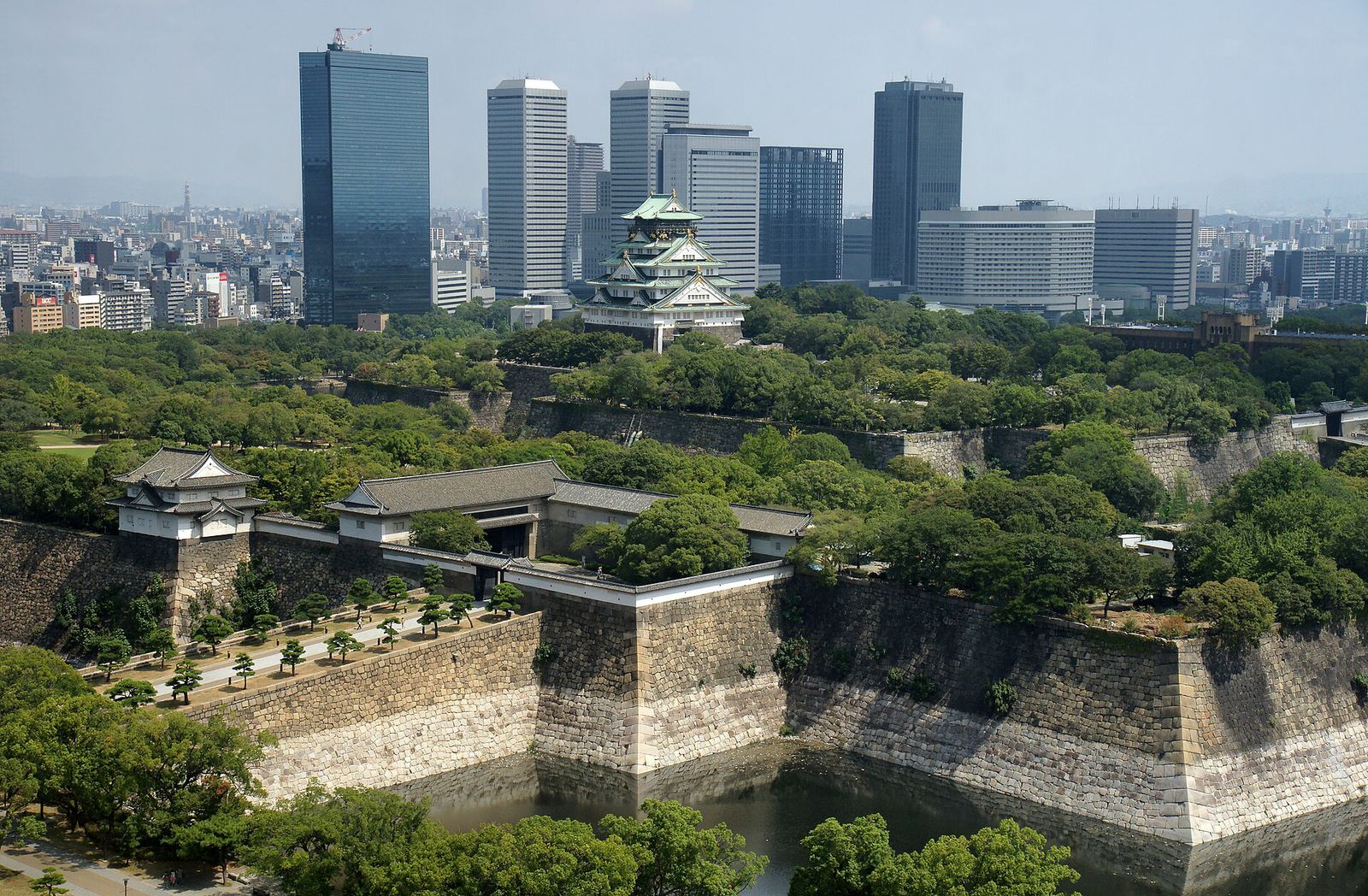
Osaka Castle Park makes a good opening chapter because it offers several versions of the same visit. You can take a quick photograph at the moat, spend an hour walking under the trees, or stay longer for the museum and seasonal gardens. Arrive earlier than your instinct suggests. The light is kinder, the paths are calmer and the heat has not yet gathered between the stone walls.
- Walk the outer moat before deciding whether to go inside the keep.
- Carry water; the open paths feel warmer than the nearby station platforms.
- Choose one interior visit, not every exhibit, and save attention for the rest of the day.
Cross the city slowly at lunchtime
From the park, head toward Nakanoshima rather than racing straight to the loudest part of Namba. The riverside district changes the tempo: modern buildings, bridges, museum facades and long views between the water. A coffee or a small lunch here acts as a reset. You are still in central Osaka, but the city no longer asks for a decision every ten metres.
This is also a useful moment to check the weather and your energy. If the afternoon is hot, move indoors for a museum or department-store food hall. If the sky is clear, keep walking and use the river as your navigation line. A flexible plan feels less like giving something up and more like making space for the city to show itself.
Let the evening get a little noisy
Save Dotonbori for after the first meal, when the signs begin to glow. The canal is theatrical and crowded, which is exactly why it works as an evening finish rather than a quiet introduction. Take the main view once, then turn into the smaller lanes around Hozenji. You will find counter seats, narrow alleys and the kind of places where ordering one thing and sharing it is completely normal.
A useful rule: one landmark, one neighbourhood and one meal is a full day. Everything else is a bonus you can accept without chasing.
What to leave off the first itinerary
Do not stack the aquarium, the castle, a faraway day trip and three shopping districts into the same 24 hours. Osaka’s best moments often happen at walking speed: a side street, a small bakery, a view from a footbridge. If you have more time, add depth rather than distance. Return to the area you liked, try it in a different light and let your second meal be guided by appetite.
Before bed, save your route home and note the station exit you used. It sounds minor, but it turns tomorrow’s first decision into an easy one.